
Cost Management Strategies is combined with the business advantages of small and medium-sized enterprises. Herein carries out strategic thinking on cost management from the following aspects. Most SMEs still manage costs in a traditional short-term profit model.
With the international development of the commodity economy, the market scope is expanding day by day. The competition is becoming increasingly fierce. Cost management model that only focuses on short-term interests can no longer meet the needs of strategic management.
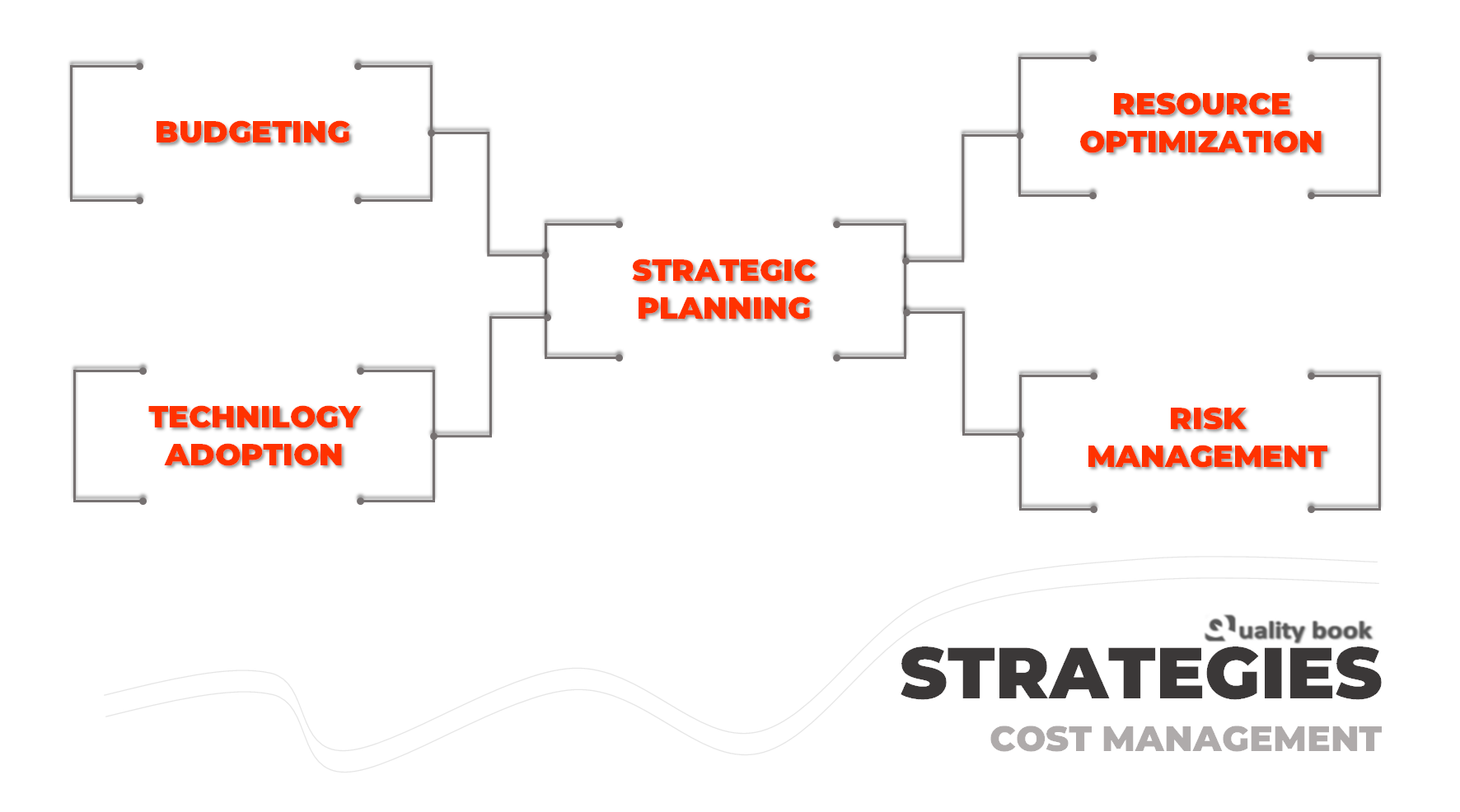
Promote cost management with technological innovation
Small and medium-sized enterprises have the advantage of technological innovation, and should establish the concept of continuously reducing the cost of products through technological innovation.
Promote cost management with technological innovation, and continuously improve product quality, style, performance, and process equipment through technological innovation to meet the upgrading, and change of consumer demand, and maintain the strategy of cost leadership.
Low cost does not equal low quality. The low cost cannot come from cutting corners or reducing product functionality. Only products with the same quality and function can be compared.
Innovation & Tech
Technological innovation to promote cost management. From the perspective of value chain analysis, can change the product to eliminate redundant part of the function.
The manufacturing process can be changed to make the process more efficient, automate high-cost, labor-intensive activities.
In the procurement process, value analysis is carried out, and the basic functions of all raw materials and spare parts are evaluate. The lowest cost is sought, so as to reduce procurement costs and raw material costs.
To promote cost management with technological innovation, in the short term, technological transformation requires investment. The development of new products also requires investment, which are all factors that increase costs.
However, in the long run, on the whole, it can not only obtain greater benefits. But also help to strive for the initiative of competition and establish the advantages of enterprises in competition. Therefore, the current investment of enterprises for future efficiency is necessary because innovative products will increase sales and market share.
Innovative products can appropriately increase the selling price.
The application of new technological achievements can improve efficiency, save energy and reduce consumption, reduce waste and loss.
The added value of product services can be increased through technological innovation. The profit factors brought by technological innovation are greater than the cost factors of its input.
Adopt the thinking of operation cost management.
Small and medium-sized enterprises cannot reduce the cost of products per unit and obtain economies of scale by producing large quantities in large quantities.
The space for SMEs to survive lies precisely in those industries that lack economies of scale and adapt to decentralized operations, or small batches and multi-variety production fields that large enterprises are unwilling to enter according to customer requirements.
In this way, in the calculation and management of costs.
It is necessary to adopt the “customer-centric” operation cost management method. Activity cost management is a scientific information system based on operations. Which shifts from “product” as the center to operation as the center, through the confirmation and measurement of operation costs, as far as possible to eliminate “non-value-added operations”, improve “value-added operations”, provide timely useful information, so as to minimize related losses and waste.
This is the basic source of digging into the potential for cost reduction and achieving cost reduction. The most important point of activity cost management is that it does not talk about cost. But focuses on the causes and consequences of cost occurrence, and effectively controls the operation cost incurred in the process of final product formation by tracking and reflecting all operation activities.
Market & Tech development
In the current fierce market competition. Small and medium-sized enterprises must carry out strategic considerations in cost management. From the management of simply reducing the production process cost of the project of labor costs.
To the cost management of the whole process including technology development, manufacturing, sales, marketing, and service starting from product design, and further penetrating into the management of all operating costs incurred in the process of final product formation. So, as to achieve continuous dynamic cost management to achieve the long-term goals of the enterprise.
Pay attention to the cost issue in the differentiation strategy
In Small and medium-sized enterprises have the advantages of diversified and characteristic services in meeting consumer needs. It is advisable to choose a differentiated strategy in market competition to form a strategy of “no one is unique”.
Differentiation strategy, also known as characteristic business strategy. Its strategic theme is to strive to form something distinctive within the whole industry through the form of company image, product characteristics, product services, technical characteristics, distribution network and other forms. So that users can establish brand preference and loyalty.
Implementing a differentiation strategy can lead to exceptional revenue.
For example, companies can effectively avoid price competition by taking advantage of customer loyalty to their brands.
The characteristics of the product make the customer’s choice become small, and its sensitivity to price is reduced.
In the face of supply-side pressure and potential product threats, enterprises or products with characteristics are often more advantageous than other competitors.
There are many ways to achieve differentiation strategies, and through patented technology. Companies can produce products that are superior in performance, and quality to existing similar enterprises.
Strengthen advertising and promotion through market publicity. So that users have different impressions of the products of the enterprise. Which are manifested in the form of differences in the functions of things, differences in service content, differences in market management methods, etc.
Strategically
SMEs must focus on cost when implementing differentiation strategies. Because of the creation of distinctive operations and differences. There are bound to be frequent costs, for example, providing users with products that last longer, generally requiring more and more expensive raw materials.
If the profits generated by the characteristic operation are offset by its corresponding costs, then the differentiation strategy is meaningless and cannot bring benefits.
Therefore, in the implementation of differentiation strategies, small and medium-sized enterprises should not ignore their own cost position. So as to make the products of enterprises different from the public, but also reduce costs.